Designing for 50 million
football fans
UEFA introduced a new Champions League format and the app had to carry that explanation to millions of fans.
The challenge was not just to explain the change, but to make exploration feel natural and exciting.

Role
I collaborated end-to-end, from discovery through production, with a cross-functional team that included a UX researcher, a UX writer, and engineers.
While research guided our design direction, business stakeholders ultimately had the final say. My role was to navigate these dynamics and ensure strategic alignment before anything shipped.


Research Insights
Through moderated user interviews with interactive prototypes, we discovered that interactivity wasn’t just a nice-to-have. It was the key to engagement and comprehension.
Confidence Gap: Fans were aware of the change but confused by the mechanics and team progression.
Content Preference: There was a clear demand for live, dynamic content rather than reading static rule explainers.
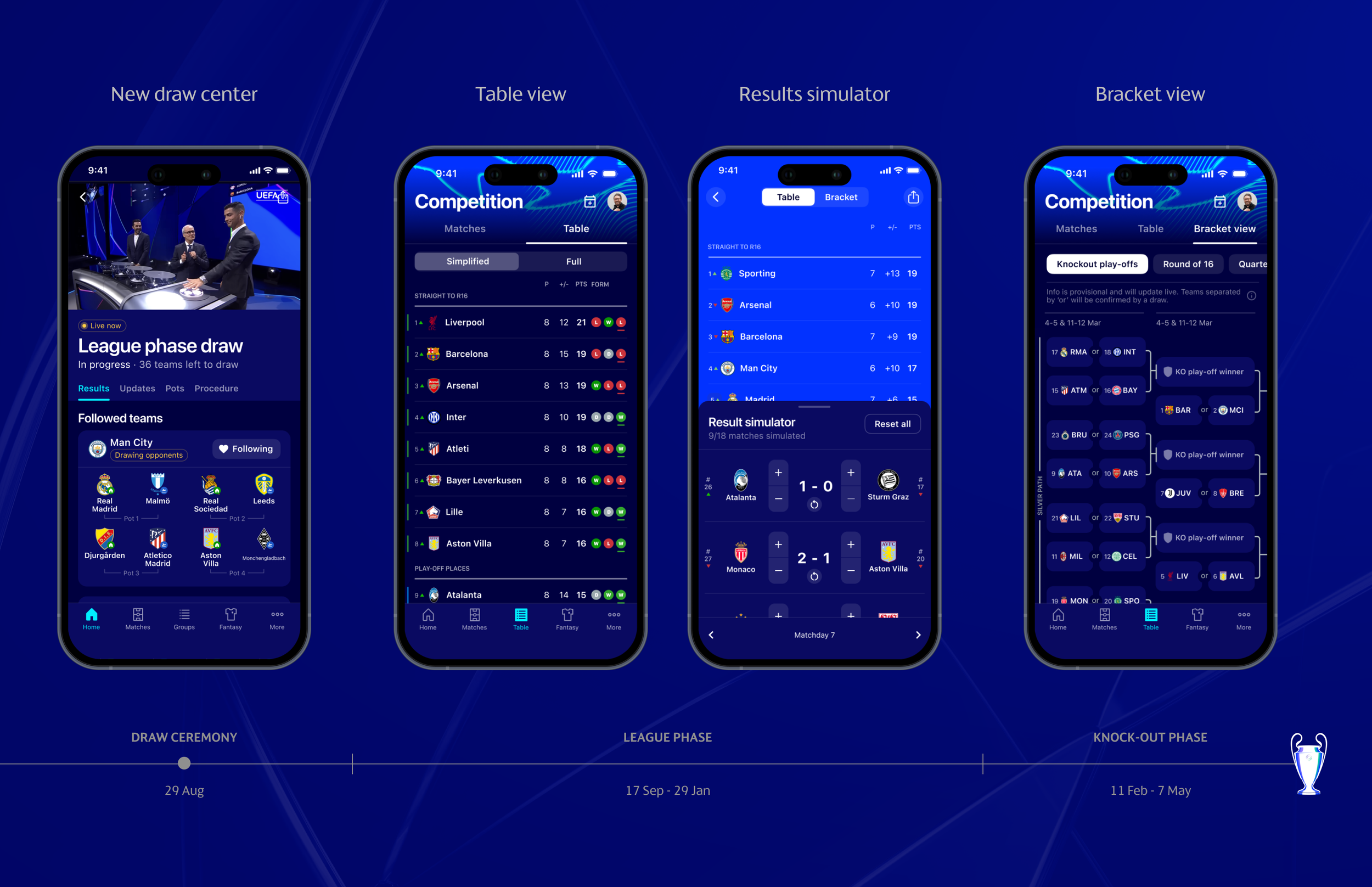
Release Strategy
Four features were released sequentially, with each introducing a new layer of information to the format.
Draw Center
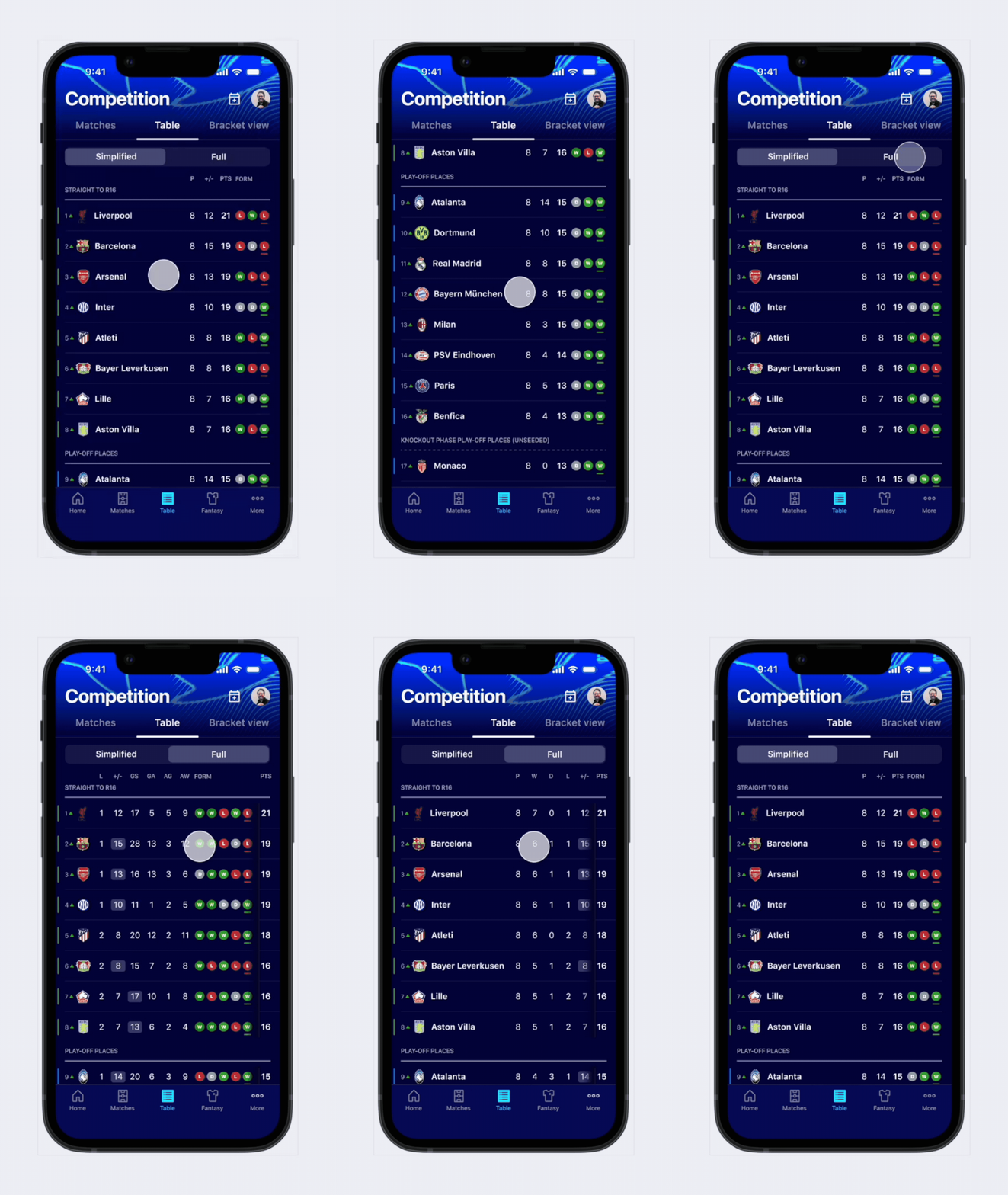
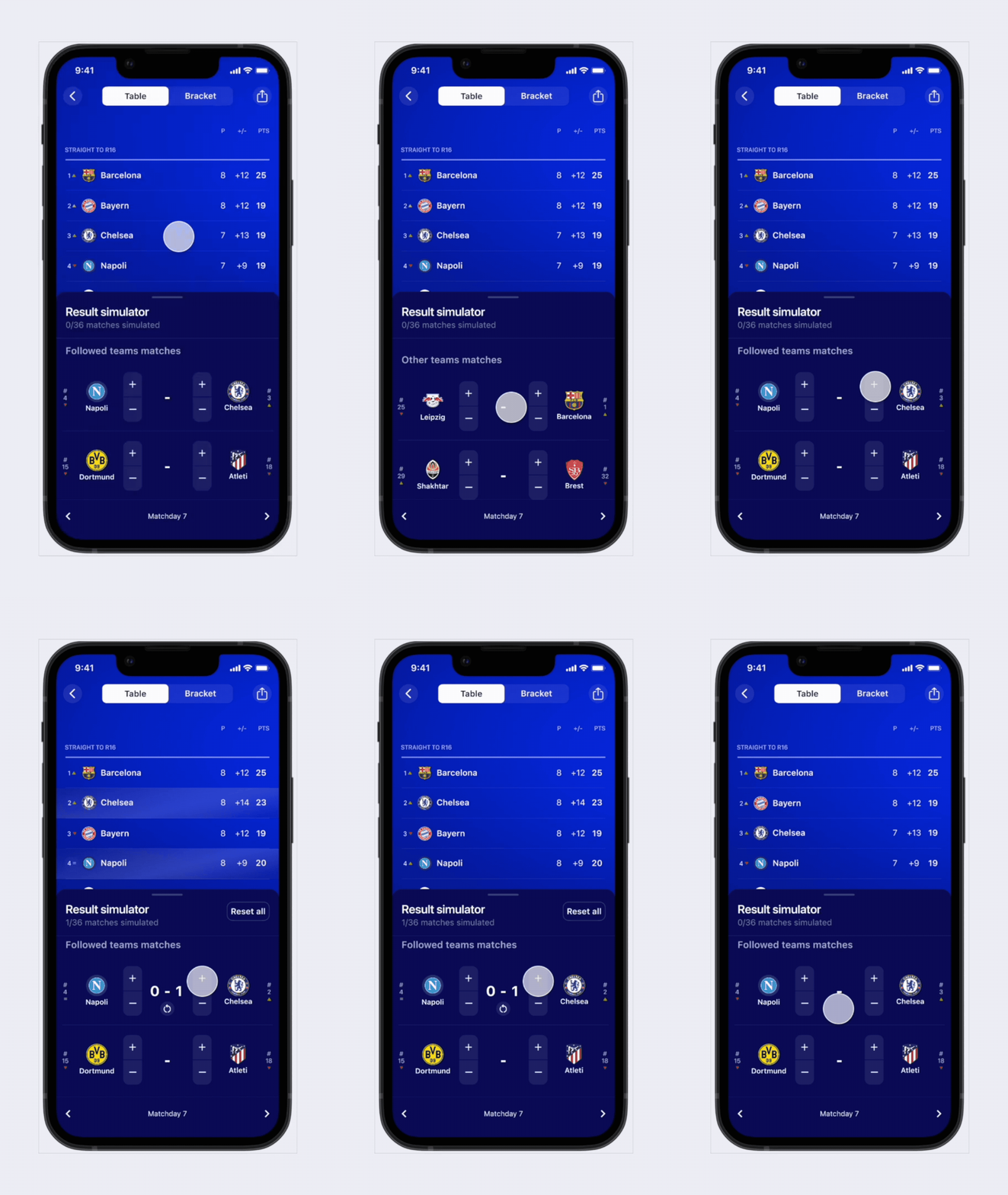
Table View & Simulator
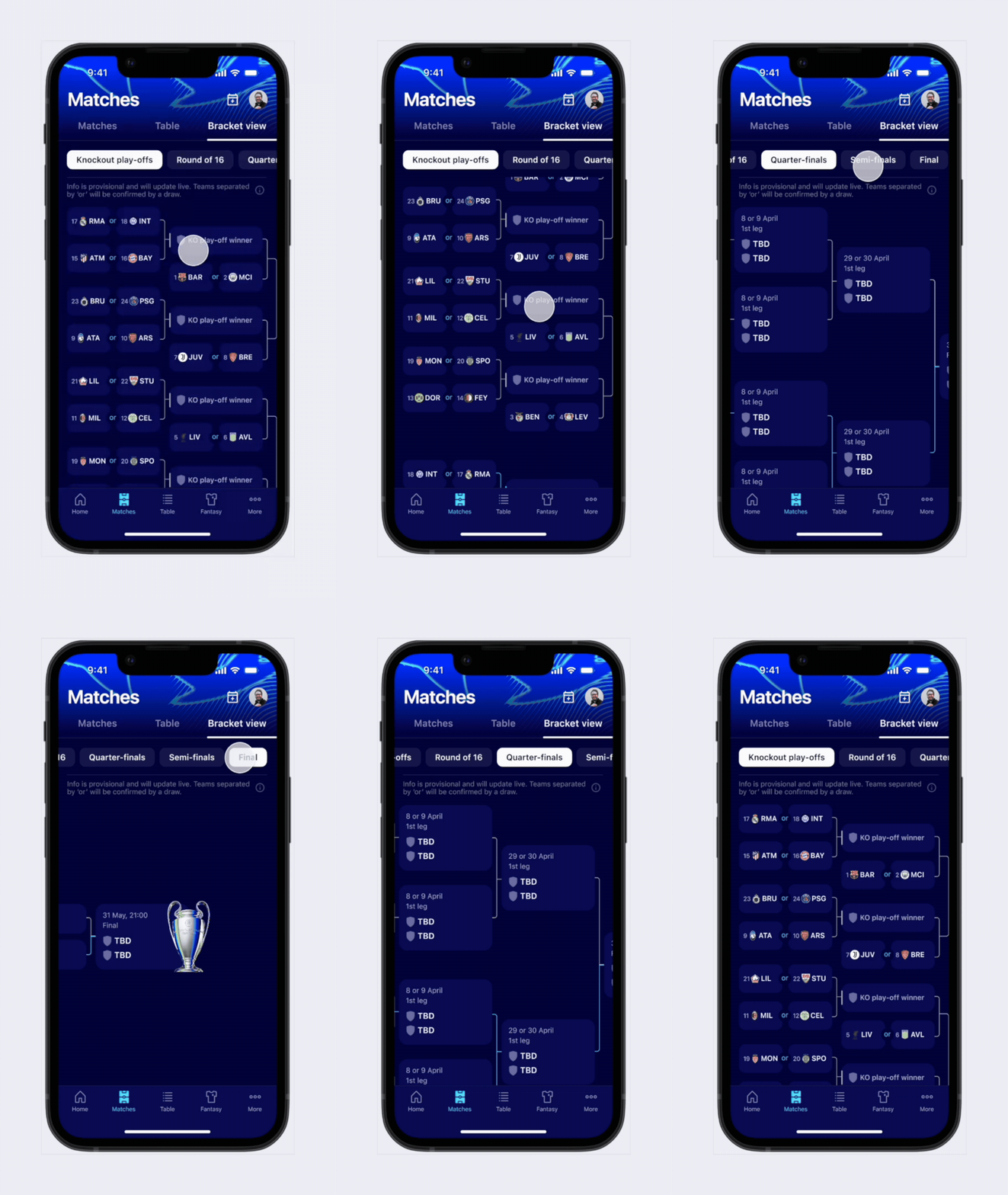
Bracket View
This progressive strategy allowed users to easily digest new content, build anticipation, and minimise cognitive load.
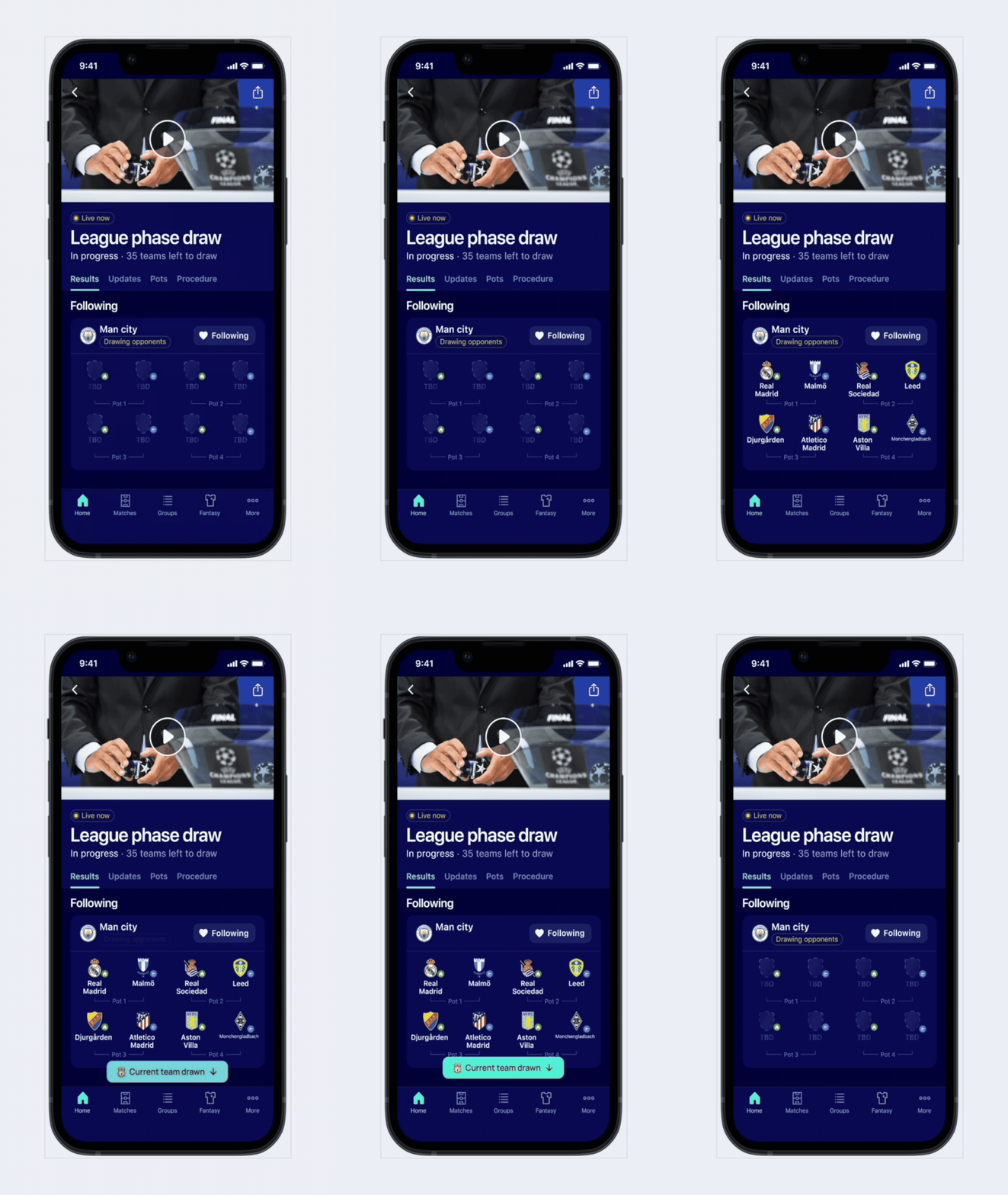
The draw is one of the most-watched moments of the season. The job was to make the app feel as close to the broadcast as possible, with results appearing in real time as each club's opponents were revealed.
The table view didn't just display the standings. For many fans, it was the first time the new format actually made sense.
Research made the pattern clear: passive information wasn't enough. Fans wanted to manipulate the standings, test scenarios and see how results would affect their club's position. The Simulator gave them that.
The bracket view needed to update accurately as matches concluded, handle peak traffic during live events, and remain legible at a quick glance.
+52%
Views vs. prev season
Table view doubled the views of the previous groups layout.
77%
Returning users
The simulator boosted user retention.
1:46m
Avg. engagement time
Simulator had 2x the engagement time of other sections.
Three core design principles
01
Complexity had to be released over time, not all at once. Feature timing was as important as feature design.
02
Every interactive feature outperformed its static equivalent. Fans engage deeply when given the right tools.
03
Draw center, simulator, and bracket view all spiked during live events. Designing for those moments defined the product's value.
Live events. Massive audiences. A format people need to understand in real time. That's what I built at UEFA.
-

50+ million
Downloads
(Android) -

4.8 rating
293,000+ reviews (Android + iOS)
-

13.4 million
Avg. monthly users
(App + Web)
UEFA EURO 2024 app

Challenges
EURO 2024 presented a major logistical challenge: providing millions of fans with a single, scalable tool for both stadium entry and intercity travel.
To succeed, we had to develop a digital Fan Pass focused on two pillars:
Logistical Versatility: Managing diverse travel benefits and match schedules across ten host cities within a single interface.
Operational Robustness: Ensuring high-speed scanning and reliability to eliminate friction for fans, UEFA staff, and German travel authorities alike.
Solution delivered
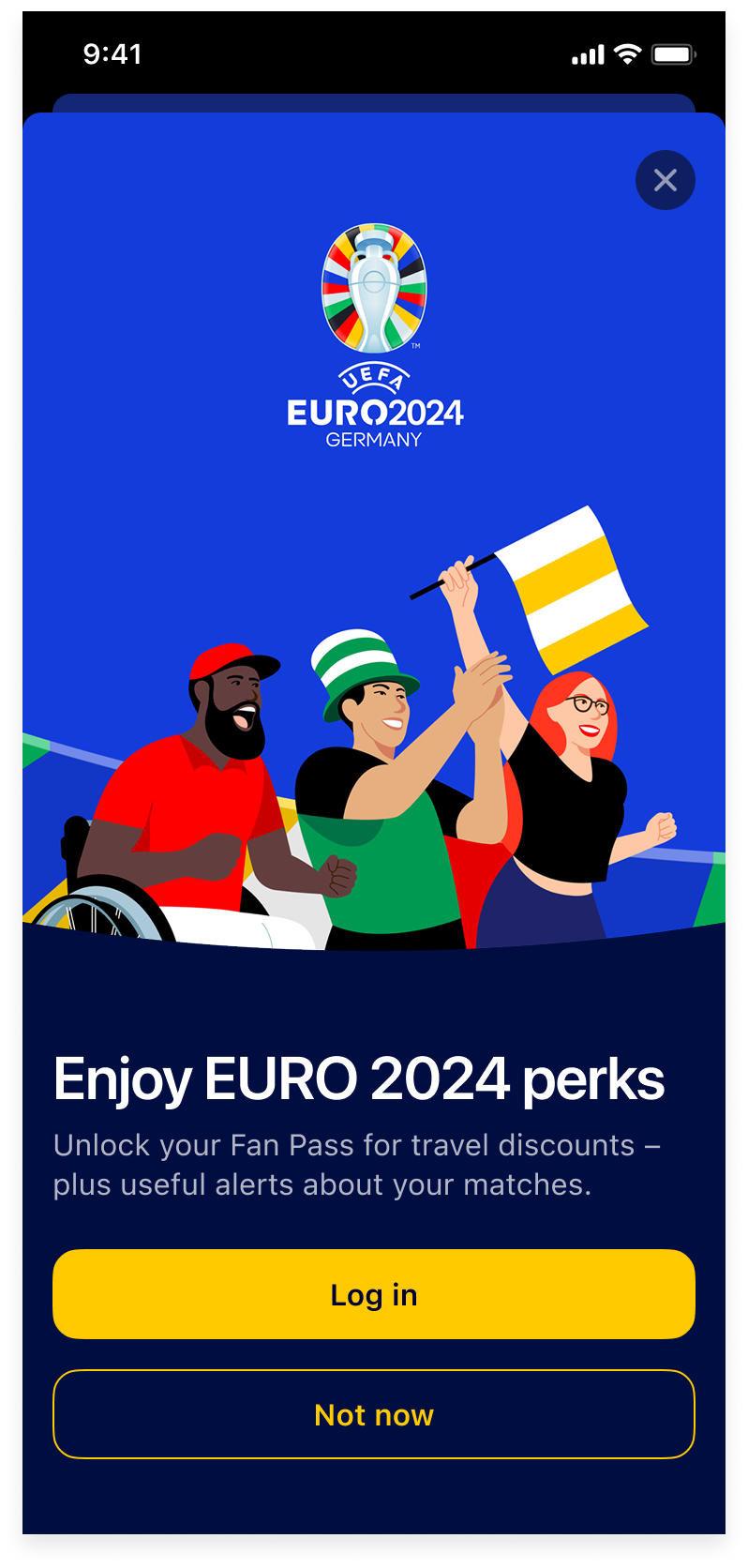
We evolved the existing Fan Pass from a static tool into a scalable digital solution capable of handling the logistics of a major multi-city tournament.
Unified Access: Combined match tickets and travel benefits into a single pass, streamlining both stadium entry and intercity transit.
Optimized Scanning Experience: Refined the UI with local authorities for fast, reliable verification of travel benefits.
Dynamic Benefit Management: Introduced a modular benefit architecture that UEFA can remotely toggle across different venues and tournament stages.


-

850,000 users
used UEFA Fan Pass
-

81%
of match ticket holders used travel benefits
-

10 cities
Multi-city network integration